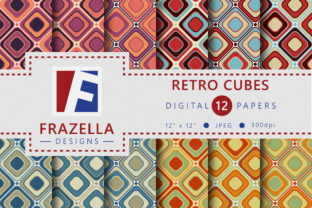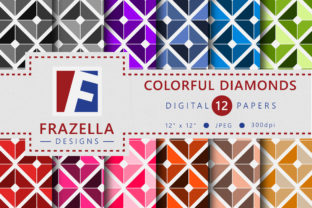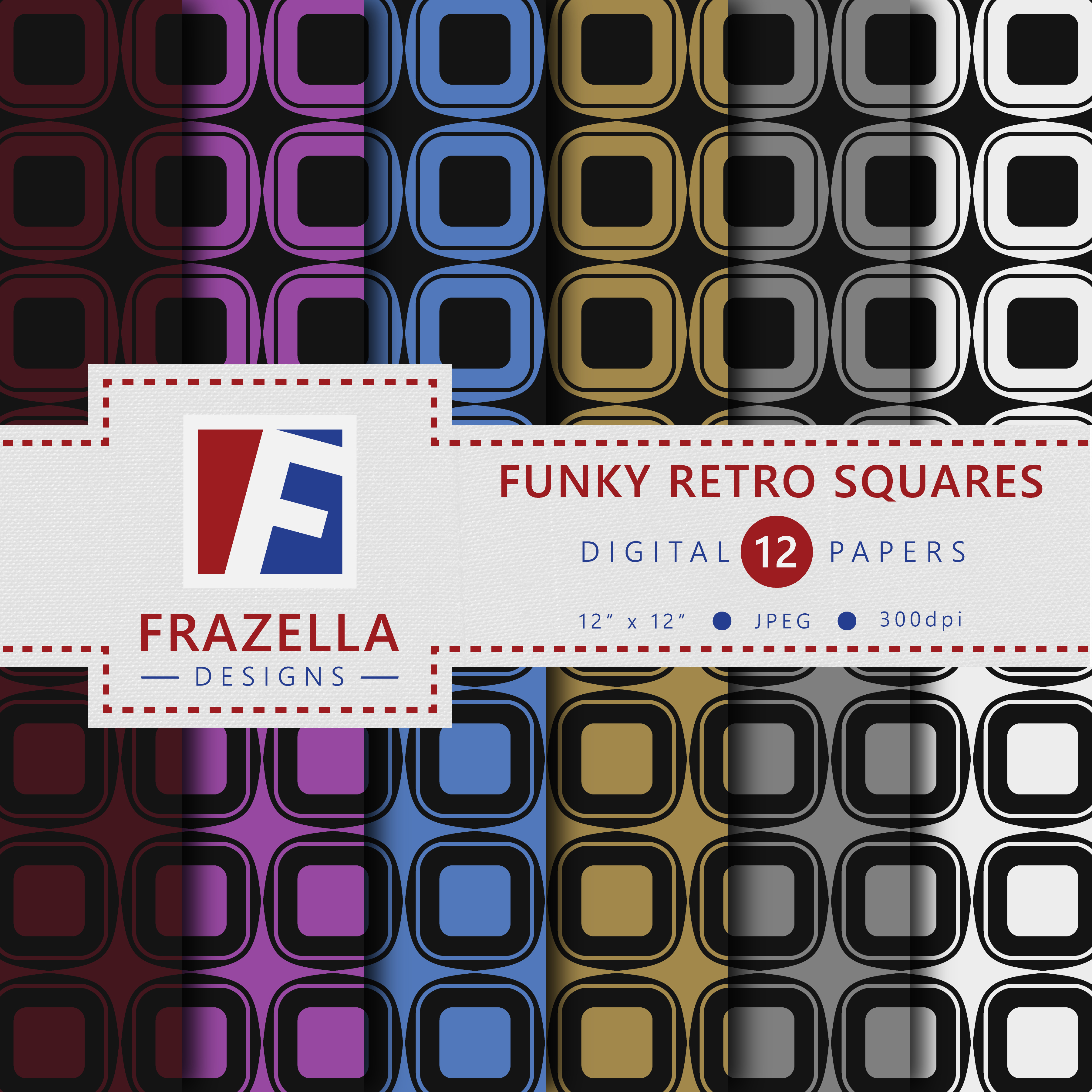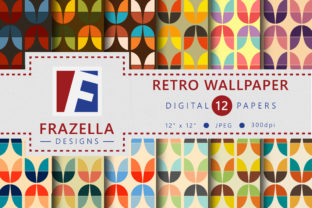
Interlocking Hexagon Digital Paper Collection
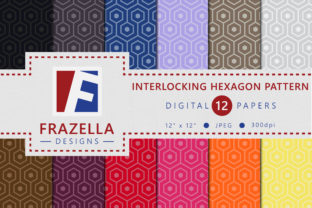
Hexagons have long held a quiet kind of magic—found in honeycombs, snowflakes, and molecular structures. When translated into digital paper design, that geometry becomes both functional and expressive. The Interlocking Hexagon Digital Paper Collection is a set of high-resolution, tileable patterns where each hexagon fits seamlessly with its neighbors—no gaps, no overlaps, no guesswork. These aren’t static backgrounds; they’re flexible design assets built for real-world use across digital and print workflows.
Why this matters—depending on who you are
What makes one pattern collection valuable to a teacher might be irrelevant to a freelance graphic designer—and vice versa. The Interlocking Hexagon Digital Paper Collection works because it meets distinct needs without requiring compromise.
For educators and students
A middle school art teacher preparing a tessellation unit can drop these papers straight into a slide deck or handout—no resizing, no distortion. Because the hexagons interlock precisely, students see how repetition and symmetry operate in practice. One educator used the collection to create printable geometry puzzles: cutting out individual hexagons, then reassembling them into larger compositions. That tactile layer deepens understanding far more than a static diagram ever could.
For hobbyists and crafters
If you design greeting cards, journal covers, or fabric prints, consistency matters. You don’t want seams showing when you tile a background across an 8.5×11 sheet—or worse, across a 24×36 poster. The Interlocking Hexagon Digital Paper Collection eliminates that worry. Its seamless tiling means you scale freely, rotate confidently, and layer without visual breaks. A scrapbooker shared how she used one muted teal pattern as a subtle base for a memory layout—then overlaid handwritten notes and photos without competing textures.
For small business owners and marketers
Branding isn’t just logos and fonts—it’s texture, rhythm, and tone. A local apothecary used a soft lavender hexagon pattern from this collection as the background for Instagram story templates. It reinforced their handmade, botanical identity while keeping text fully legible. Unlike generic stock patterns, these hexagons offer enough visual interest to stand out in a feed—but not so much that they distract from product shots or calls to action.
For designers and publishers
Print-ready resolution (300 DPI) and CMYK compatibility mean these papers move smoothly from screen to press. A self-publishing author chose a charcoal-gray interlocking hexagon design for chapter dividers in her poetry chapbook. The subtle geometry added structure without overwhelming sparse verse. For designers working under tight deadlines, knowing a pattern will tile cleanly—without needing custom alignment or bleed adjustments—saves time and reduces revision rounds.
What “interlocking” actually means—and why it changes how you work
Not all hexagon patterns are created equal. Some rely on forced spacing or artificial borders. Others only tile in one direction. The Interlocking Hexagon Digital Paper Collection uses true edge-to-edge tiling: each side of every hexagon matches the adjacent side of its neighbor, pixel-perfectly. That means:
- You can repeat the pattern horizontally and vertically—no visible grid lines.
- Rotating the pattern by 60° still maintains continuity (handy for dynamic layouts).
- Cropping or masking part of the pattern won’t break the illusion of infinite repetition.
This isn’t theoretical. A wedding stationery designer told us she used the same base pattern across save-the-dates, menus, and thank-you cards—rotating and recoloring it slightly for variety—while keeping everything unmistakably part of one cohesive suite.
Practical flexibility—not just pretty pixels
Each paper in the collection is delivered as a standalone PNG or JPEG file, sized at 12×12 inches (3600×3600 px at 300 DPI). That size works equally well for:
- Digital scrapbooking kits (compatible with Photoshop, Affinity Photo, Canva, and Cricut Design Space)
- Print-on-demand services (like Printful or Gelato) for mugs, notebooks, or tote bags
- Web backgrounds where CSS tiling preserves sharpness on retina displays
- Educational handouts, worksheets, or interactive PDFs
No plugins, no subscriptions, no locked layers. Just clean, ready-to-use files. That simplicity matters most when you’re juggling multiple roles—like a blogger who also sells printable planners, teaches a workshop, and designs her own newsletter headers.
How to know if this fits your next project
Ask yourself:
- Do I need predictable, scalable texture? If your work relies on consistent visual rhythm—whether for branding, teaching, or crafting—interlocking geometry delivers reliability.
- Am I printing or sharing digitally? Since these papers are high-res and format-agnostic, they adapt to either path without extra prep.
- Do I value clarity over clutter? These aren’t busy or overly ornate. They provide structure, not noise—ideal when typography, photography, or illustration needs room to breathe.
- Is time a constraint? If you’ve spent hours adjusting tile offsets or stitching edges manually, this collection removes that step entirely.
It’s not about replacing creativity—it’s about removing friction so your ideas land clearly. A homeschool parent used a warm terracotta hexagon paper as the base for a weekly chore chart. A UX writer embedded a light gray version behind a modal window to soften focus without sacrificing accessibility contrast. A lettering artist printed one pattern onto vellum, then layered it beneath hand-inked quotes for depth and dimension.
One set, many possibilities
The Interlocking Hexagon Digital Paper Collection includes one cohesive set—thoughtfully curated, not overcrowded. That restraint is intentional. Too many options can stall progress; too few limit expression. This set strikes a balance: enough variation in tone and contrast to suit different moods and mediums, but unified enough to feel intentional across projects.
Whether you’re sketching wireframes, prepping a classroom bulletin board, designing packaging, or building a portfolio website—the underlying geometry stays supportive, never dominant. And because hexagons naturally suggest connection, growth, and efficiency, the pattern quietly reinforces those values in your work—without saying a word.