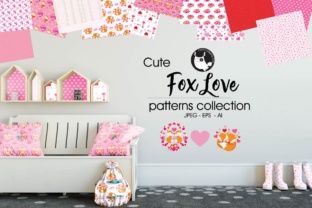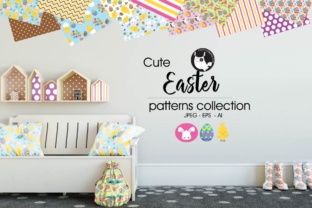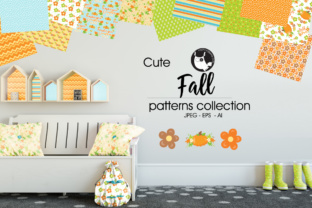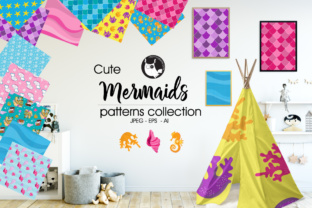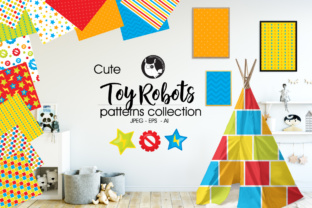
Toy Robots: Super Cute & High-Quality Pattern Backgrounds
If you've ever spent 45 minutes searching for a background that’s playful but professional, whimsical but print-ready, or charming without being childish—you already know the value of a thoughtfully crafted design asset. Toy Robots delivers exactly that: a cohesive, super cute pattern background collection built for real-world use—not just decoration.
This isn’t clipart repackaged as “design.” It’s a precision-crafted set of graphic elements rooted in clean vector construction, intentional color harmony, and scalable versatility. Each robot is stylized with gentle curves, friendly proportions, and subtle personality—no sharp edges, no visual noise. The patterns balance repetition and rhythm so they feel dynamic at a glance but never overwhelming in application.
What You Actually Get (and Why It Matters)
The Toy Robots package includes three essential, production-ready file types—each serving a distinct purpose in your workflow:
- 1 EPS Vector File — Universally compatible, ideal for print vendors, large-format output, or legacy design software. Maintains crispness at any scale, from business card icons to wall murals.
- 1 Adobe Illustrator (.ai) File — Fully layered and editable. Adjust colors, isolate individual robots, tweak spacing, or adapt motifs for custom branding—without starting from scratch.
- Individual hi-res JPEGs (300DPI) — Each graphic element saved separately as a high-resolution raster file. Perfect for quick drag-and-drop into presentations, social posts, email headers, or classroom handouts—no tracing, no conversion delays.
No hidden layers. No placeholder fonts. No “unlock premium version” surprises. What’s shown is what you use—immediately and reliably.
Where Toy Robots Fits Into Real Workflows
Professionals across disciplines find unexpected utility in this collection—not because it’s flashy, but because it solves quiet, persistent problems.
Educators use the individual robot JPEGs to create themed worksheets, behavior charts, or classroom signage. One teacher told us she printed the robots on sticker paper, cut them out by hand, and used them as positive reinforcement tokens—students loved collecting “robot helpers” for completed tasks. Because each is saved separately and at 300DPI, there’s zero pixelation when scaled down to 1.5 cm tall.
Freelancers and marketers integrate the vector patterns into pitch decks, client onboarding kits, or SaaS dashboard UI mockups. A UX designer recently embedded the repeating pattern as a subtle background layer behind a product feature grid—adding warmth and approachability without competing with content. The EPS ensures seamless handoff to developers or print partners who don’t use Adobe Creative Cloud.
Small business owners apply the .ai file directly to packaging mockups—wrapping a candy box or labeling a toy subscription kit. Since all robots share consistent stroke weights and proportional balance, the design reads as unified even when cropped or rotated. That consistency builds brand recognition faster than generic stock graphics ever could.
Design Strengths You Can Rely On
Not all “cute” patterns hold up under scrutiny—or repeated use. Here’s what makes Toy Robots stand up to professional demands:
- Color-intentional palette — Designed in CMYK-safe, screen-optimized hues. No neon oversaturation. No muddy grays. Works equally well on white, light gray, or soft pastel backgrounds.
- Optimized negative space — Patterns repeat cleanly without visual crowding. Even at 20% opacity, the motif remains legible—not washed out or indistinct.
- Scalable without compromise — Whether you’re printing a 48" trade show banner or embedding a 64x64px favicon variant, the vector foundation eliminates interpolation artifacts or edge fuzziness.
- Cross-platform ready — The JPEGs open instantly in Canva, PowerPoint, Keynote, Google Slides, and Figma. No plugin required. No font dependency. Just drag, drop, and go.
Practical Considerations Before You Use It
While Toy Robots is versatile, thoughtful implementation still matters. Here are grounded observations from actual users:
First, don’t over-pattern. One user applied the full repeating background to every slide in a 20-page investor deck—and found it distracted from data. Their fix? Using just one robot as a corner accent on title slides, and switching to solid-color backgrounds elsewhere. Less often equals more memorable.
Second, test contrast early. If placing text over the pattern, try both light-on-dark and dark-on-light versions—even subtle variations in robot outline weight affect readability. The .ai file lets you quickly toggle stroke visibility or add subtle drop shadows for clarity.
Third, leverage the individual JPEGs for personalization. A children’s book illustrator used four separate robots to represent different characters in a chapter header series—assigning each a consistent pose and color variation. Because they were pre-saved and sized consistently, layout time dropped by nearly 70%.
When This Collection Makes the Most Sense
You’ll get the highest return on Toy Robots if you regularly produce materials where tone and trust matter—especially when balancing fun with credibility. Think:
- Early-stage edtech platforms building friendly onboarding flows
- Therapists or special educators designing visual schedules
- Indie game studios crafting UI assets for family-friendly titles
- Print-on-demand creators developing themed stationery or planner inserts
- HR teams building inclusive, low-stakes internal comms (e.g., wellness challenge trackers)
It’s less suited for ultra-minimalist luxury branding or technical documentation where neutrality is non-negotiable. But within its sweet spot—approachable, human-centered communication—it performs with quiet confidence.
A Final Note on Long-Term Value
Good design assets earn their keep across projects—not just one. Users report reusing these robots across client work, personal side projects, and even physical products like enamel pins or fabric prints. Because the vector files retain full editability and the JPEGs require zero setup, the friction to reuse is near zero. That translates directly to saved hours, fewer licensing headaches, and more consistent visual language across touchpoints.
In short: Toy Robots doesn’t shout. It supports. It adapts. And it does so without asking you to compromise on quality, control, or clarity.